
Care Area
Diabetes follow-up
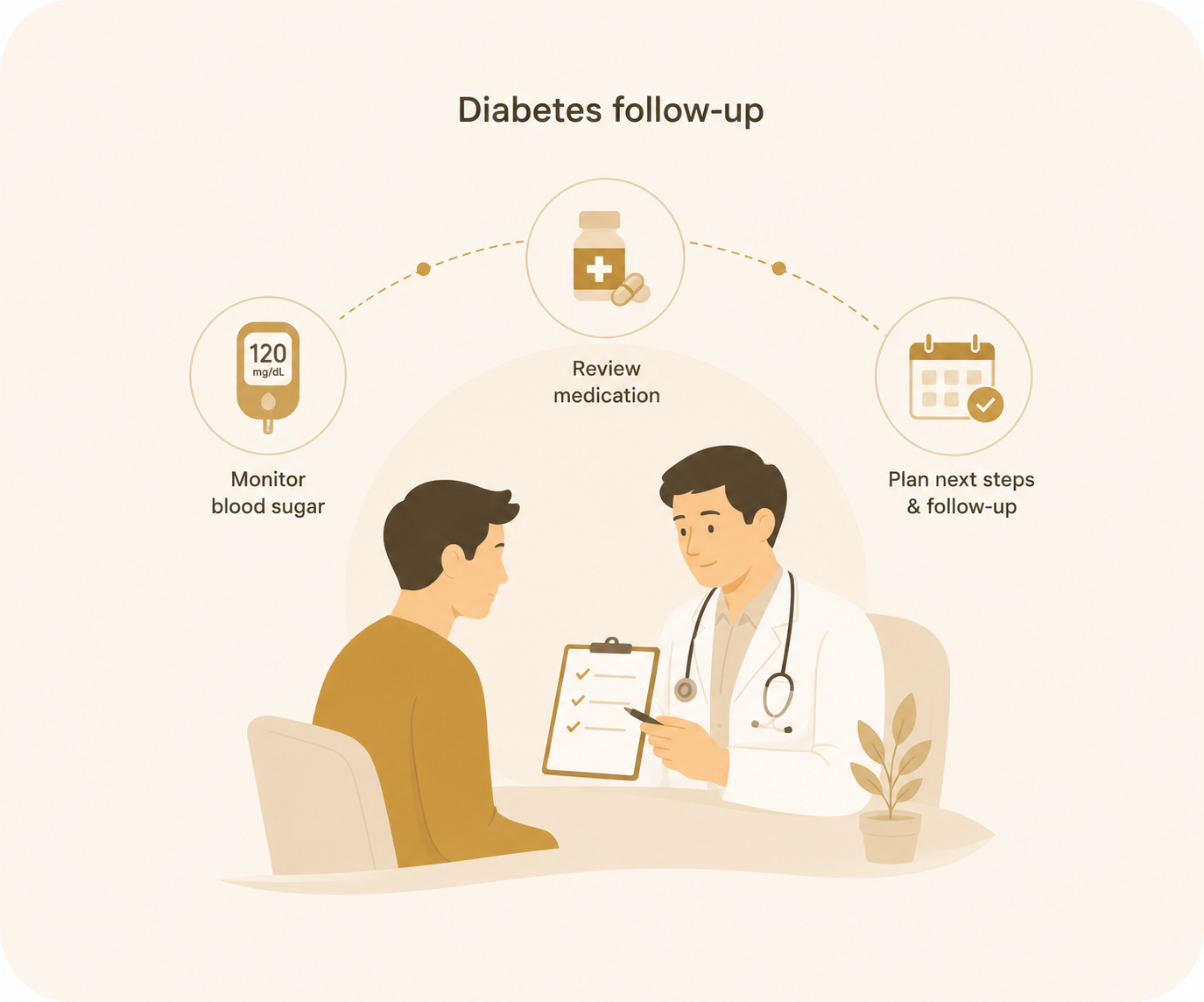
Diabetes is a long-term condition where blood sugar stays higher than normal. With regular follow-up, the right medicines and small, steady daily habits, most people live full and healthy lives — the key is consistency, not fear.
Understanding diabetes
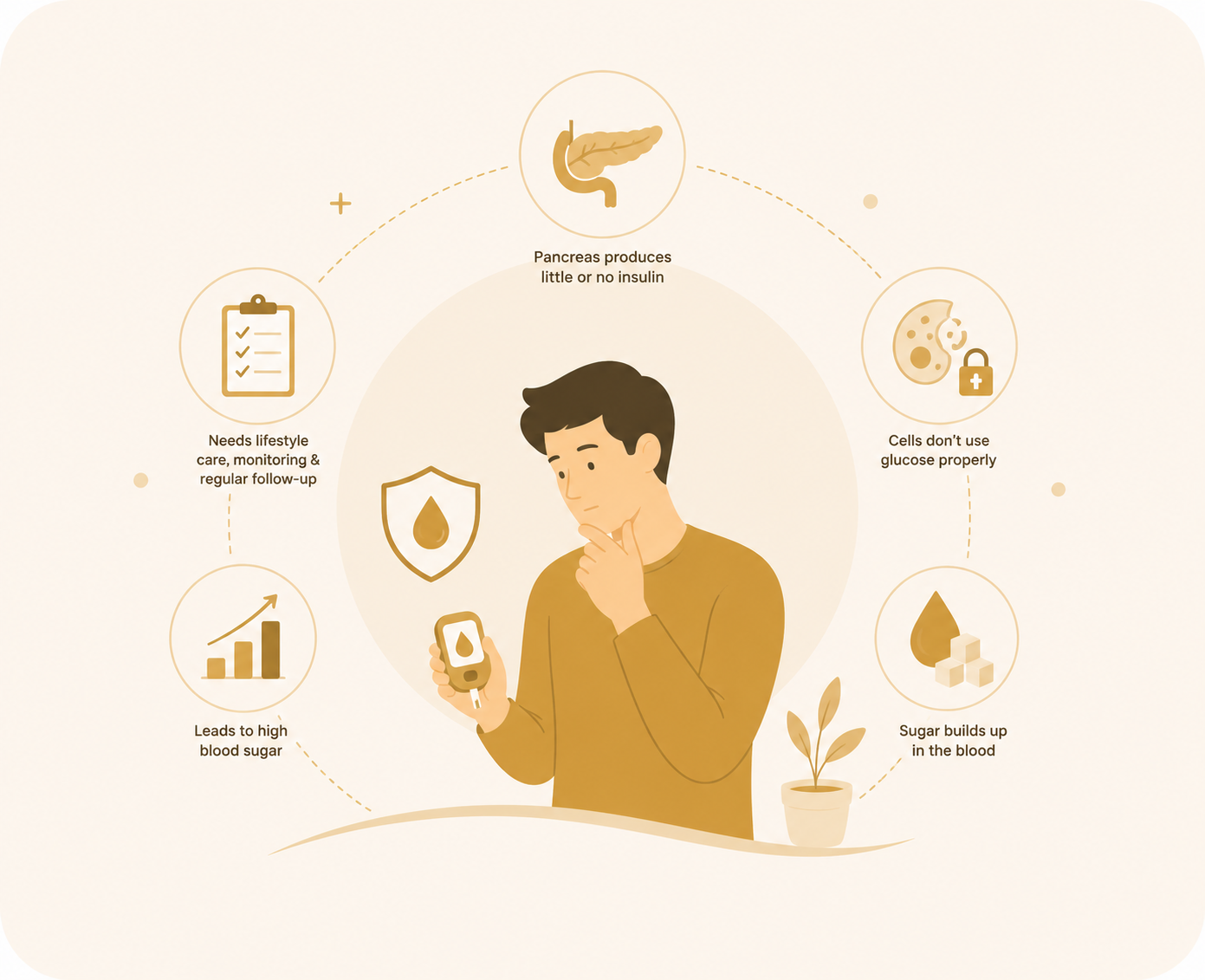
In type 2 diabetes — the most common form — the body either does not make enough insulin or cannot use it well, so glucose builds up in the blood. Over time, uncontrolled sugar can quietly damage the eyes, kidneys, nerves and heart.
The HbA1c test reflects your average blood sugar over about three months and is the best single measure of control. Regular follow-up lets us adjust treatment early, before complications begin, and keep your numbers in a safe range.
Common signs & symptoms
- Increased thirst and hunger
- Passing urine more often, especially at night
- Unusual tiredness or weakness
- Slow-healing cuts and wounds
- Blurred vision
- Tingling or numbness in the feet
How to take care
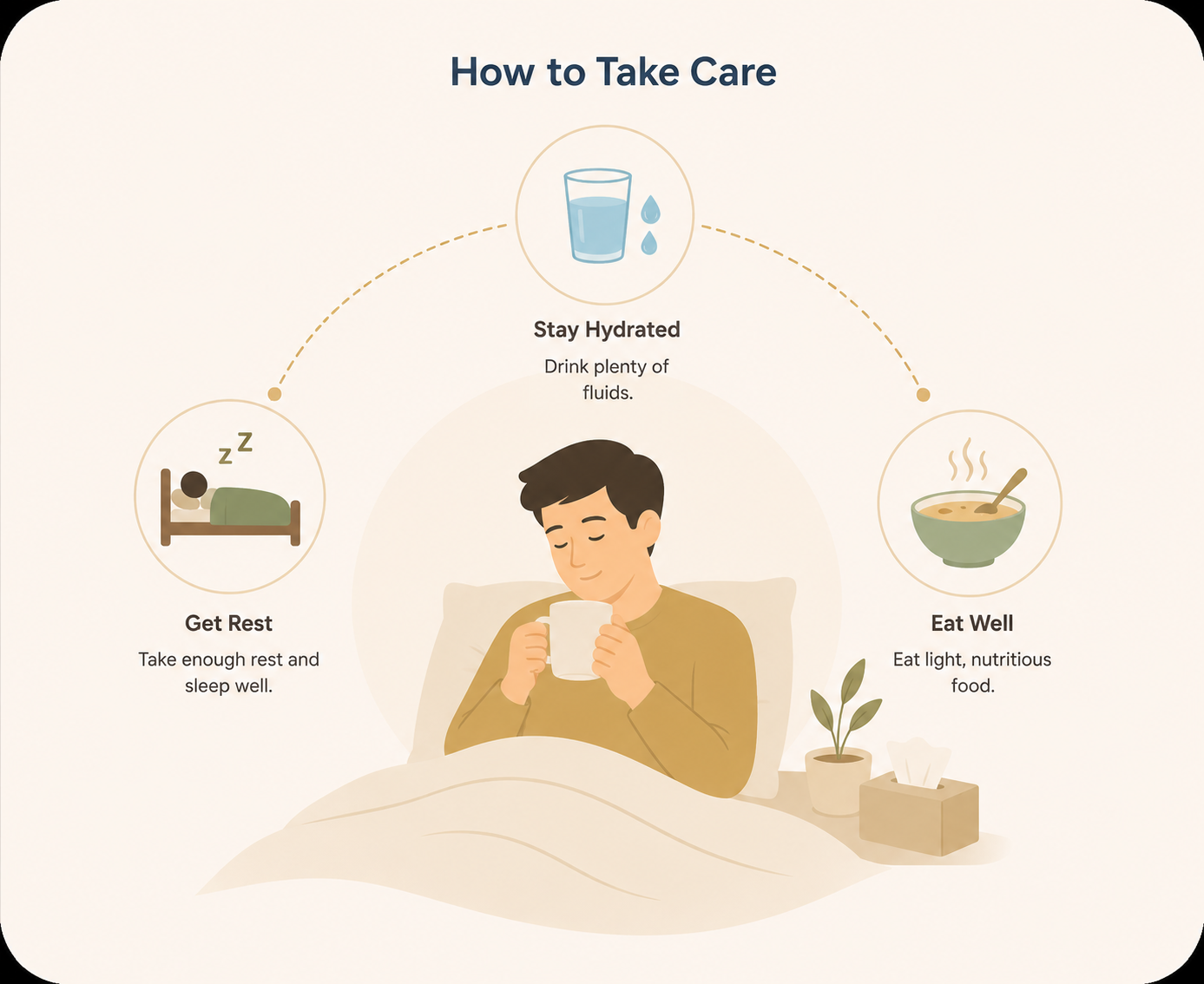
Check your blood sugar as advised and keep a simple log to bring to each visit. Take your medicines or insulin on time, and eat balanced meals at regular hours with fixed portions rather than skipping and overeating later.
Thirty minutes of walking most days makes a real difference to control. Look after your feet daily, keep your follow-up appointments, and get your HbA1c, eyes and kidneys checked periodically so problems are caught early.
What to do
- Monitor and record your blood sugar as advised
- Eat fixed-portion meals at regular times
- Walk or stay active for about 30 minutes daily
- Keep every follow-up and lab appointment
- Carry a quick sugar source in case of a low (hypoglycaemia)
What to avoid
- Don't skip meals or your medicines / insulin
- Avoid sugary drinks, sweets and refined carbohydrates
- Don't ignore a foot wound, blister or ulcer
- Don't stop or change your dose on your own
- Don't rely on home remedies in place of treatment
When to see the doctor
Seek care promptly for very high or very low sugar readings, persistent vomiting, a foot ulcer or infection, chest pain, sudden changes in vision, or drowsiness and confusion. These can be signs of a serious complication.
Consult
Talk to Dr Ajit Kishor about diabetes
Monika Niwaas, opposite Patna College, near Razza High School, Annie Besant Road, Patna 800004, Bihar.